We at the NGO "Young People for Haifa" meet dozens of people every week. Some come to our community coworking space, some participate in lectures and events, some are new immigrants making their first steps in Israel, and some are young people at the beginning of their professional and personal journeys trying to build a future here.
Over the years, we have discovered a phenomenon that repeats itself time and again.
Sometimes, a person is fired from their job and does not know whether their employer acted according to the law.
Sometimes, a family receives a letter from Bituah Leumi (National Insurance Institute) and cannot understand what exactly is required of them.
Sometimes, a new immigrant signs a lease agreement without fully understanding the implications of the clauses they signed.
Sometimes, a young person at their first job does not know what rights they are entitled to.
Sometimes, a small business owner receives a payment demand, a fine, or a legal letter and does not know how to act.
And in most cases, the problem is not injustice.
The problem is a lack of knowledge.
Many people simply do not know what their rights are, whom to turn to, what options are available to them, and what the first step they need to take is.
For new immigrants, young people starting out, and young families, this information gap can become a real obstacle. Sometimes, unfamiliarity with the system creates a sense of helplessness, even when the law is actually on their side.
We believe that knowing your rights is an integral part of being able to integrate into society, build personal confidence, and take control of your life.
Out of this understanding, "The Right to Know" project was born.
🎓 Young People Starting Out Need Guidance
One of the main audiences that the NGO "Young People for Haifa" works for is young people at the beginning of their journey.
The transition to the adult world brings quite a few challenges: a first job, a first lease agreement, opening a business, studying, dealing with authorities, institutions, and various bodies.
Time and again, young people find themselves in complex situations without understanding what their rights are or whom they can turn to for a reliable answer.
Sometimes it involves wages that were not paid in full.
Sometimes a problematic employment contract.
Sometimes a dispute with a landlord.
Sometimes dealing with academic institutions.
And sometimes simply an official letter that no one knows how to read.
When there is no experience and no guidance, even a small problem can quickly turn into stress, uncertainty, and sometimes even financial damage.
Precisely because of this, we believe that making legal knowledge accessible is an integral part of empowering young people and providing tools for a more independent and secure life.
🌍 New Immigrants Do Not Have to Deal with it Alone
For new immigrants, the challenge is even more complex.
Moving to a new country brings a new language, new laws, a new culture, and systems that are not always easy to understand.
Many immigrants are required to deal with employment contracts, lease agreements, Bituah Leumi, rights facing authorities, absorption procedures, and official documents—sometimes even before they have managed to learn the language and get to know the system.
We believe that no one should feel alone in the face of bureaucracy.
Just as we work to promote the social and professional integration of new immigrants, it is equally important to us to help them understand their rights and receive reliable, accessible information.
💡 Sometimes One Conversation Can Change Everything
We believe that not every problem has to start in court.
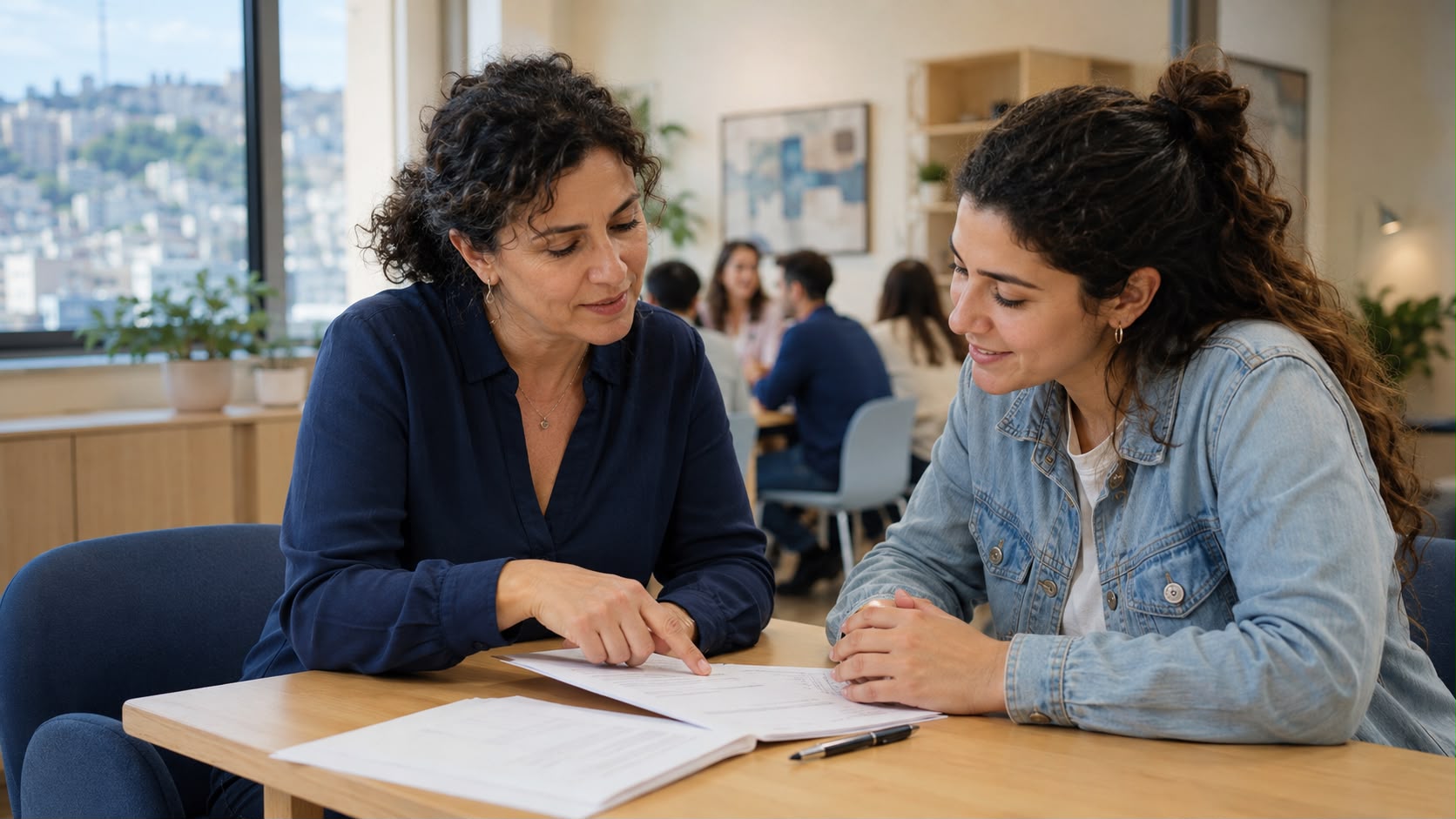
Sometimes all a person needs is to sit down with a professional, ask the right questions, and get a clear explanation in simple language.
One conversation can prevent an expensive mistake.
One conversation can help a person realize they are entitled to rights they didn't know about.
One conversation can give the confidence to act instead of remaining in uncertainty.
One conversation can make the difference between confusion and making the right decision.
This is exactly why we set up the project.
🤝 Knowledge Passed from Person to Person
"The Right to Know" project is based on mutual responsibility and community volunteering.
The lawyers and professionals taking part in the initiative dedicate their time and experience for the benefit of the community, out of the belief that every person deserves to receive reliable, accessible, and clear information.
Just as other volunteers assist in social projects, accompany new immigrants, distribute equipment to the needy, or contribute to the community in other ways—here too, professional knowledge becomes a tool for giving and mutual aid.
We believe that a strong community is a community where people share not only time and resources, but also knowledge and experience.
📋 How Does the Project Work?
Once every two weeks, a special community consultation day takes place at the community center of the NGO "Young People for Haifa," in cooperation with volunteer lawyers and professionals.
Meetings are held by prior registration only and allow each participant to receive initial guidance regarding the legal or bureaucratic issue they are facing.
The goal is not to replace a law firm or a full legal proceeding.
The goal is to:
✔ Bring order to the situation
✔ Explain
✔ Guide
✔ Provide reliable initial information
✔ Give people the tools to make the right decisions
👥 Who is the Project For?
The project is open to all residents of Haifa and the surrounding area who need initial guidance, and especially:
- Young people starting out
- Students
- New immigrants
- Young families
- Salaried employees
- Freelancers and small business owners
- Residents dealing with authorities and public bodies
We believe that knowing your rights is not a privilege.
It is a basic right.
⚖️ On Which Topics Can You Receive Guidance?
💼 Employee Rights and Labor Law
Were you fired?
Were you summoned to a hearing (shimo'a)?
Were you not paid your full salary?
Not sure what you are entitled to regarding pension, vacation, or severance pay (pitzuim)?
As part of the project, you can receive initial guidance on work issues and employee rights.
🏛 Bituah Leumi and the Realization of Rights
Many people lose out on rights simply because they do not know the system.
As part of the project, you can receive guidance on:
- Unemployment
- Disability
- Allowances and stipends
- Medical committees
- Loss of earning capacity
- Understanding documents and notices received from Bituah Leumi
📝 Contracts and Agreements
Did you receive a lease agreement?
Are you being asked to sign an agreement?
Are you hesitant before engaging with a professional?
Before signing, it is important to understand exactly what you are signing.
As part of the project, you can receive initial guidance to understand contracts, commitments, and rights.
🚗 Traffic Law
A traffic ticket, points, fines, or a summons to court can be stressful events.
As part of the project, you can receive initial guidance to understand the situation and the options available to you.
🇮🇱 Victims of Hostile Actions and War
In recent years, more and more families have found themselves dealing with bodily injury, property damage, and procedures facing state authorities.
The project allows participants to receive initial guidance regarding the rights and procedures available in these cases.
🌱 Part of a Broader Vision
The NGO "Young People for Haifa," founded by Kirill Karetnik, a member of the Haifa City Council, was born out of a simple understanding: Haifa cannot afford to lose its younger generation.
The organization works to strengthen young people, new immigrants, and communities in the city by creating real opportunities for growth, integration, and belonging. We operate a wide range of projects in the fields of community, volunteering, education, culture, employment, and absorption, based on the concept that a strong community is built when people help one another and generate solutions from the ground up.
For us, making rights accessible is not just a community service.
It is a tool for empowering young people, strengthening new immigrants, and building a community where people know how to stand up for their rights, make informed decisions, and feel more secure in front of the systems around them.
"The Right to Know" project is a natural continuation of that very concept.
Because a strong community is not just a place where people meet.
A strong community is a place where people know they have someone to turn to when they need help, when they don't know what to do, and when they need someone to show them the way.
📍 Activity Details
📍 Young People for Haifa Center – 4 Rav Ohana St., Haifa
📅 Once every two weeks
📝 By prior registration only
💙 Free of charge
⚖️ Number of spots is limited for each session
⚠️ Important to Know
The information and guidance provided within the framework of the project do not constitute legal advice, a legal opinion, or legal representation. The purpose of the project is to provide initial guidance and information accessibility only. If necessary, participants will be directed to receive individual professional advice.
💙 Because Knowledge is Power
The strength of a community is measured not only by the number of people living in it, but also by their ability to help one another.
Sometimes all it takes is one person who listens, explains, and guides you to the next step.
Sometimes all it takes is understanding your rights to make the right decision and change your reality.
This is exactly why we established "The Right to Know." Because no one should have to face a system they don't know all by themselves.